Botox is one of the most widely recognised injectable treatments in aesthetic medicine, yet many people are surprised by how many areas it can actually treat. While it is commonly associated with smoothing forehead lines or frown lines, Botox treatments are used across the face, neck and even for certain medical conditions.
Understanding what areas Botox can treat starts with understanding how it works. Botox is a purified form of botulinum toxin that acts on the nervous system. When administered via a botulinum toxin injection into a specific injection site, it temporarily interrupts nerve signals to targeted facial muscles. This reduces muscle activity, allowing the skin to appear smoother and more relaxed while maintaining natural facial expression when performed correctly.
This article explores the most common and advanced Botox treatment areas, from the upper face to the neck, and explains how treatment planning, facial anatomy and muscle depth influence results.
How Botox Works on Facial Muscles
Botox works at a muscular level, targeting the muscles of facial expression rather than the skin itself. Many facial wrinkles are caused by repeated muscle contraction over time. These are known as dynamic wrinkles. By reducing excessive muscle tone in targeted areas, Botox allows the overlying skin to smooth, which is why it is often described as a wrinkle-smoothing treatment rather than a volume treatment like dermal filler or hyaluronic acid fillers. The precise placement of Botox injection sites depends on facial anatomy, muscle depth, muscle tone and the desired aesthetic outcome.
Upper Face Botox Treatment Areas
Forehead lines
Forehead lines are horizontal lines caused by repeated contraction of the frontalis muscle. Botox injections placed into the frontalis muscles help soften these lines while maintaining natural brow movement and brow position.
Frown lines and the glabellar region
Frown lines form between the eyebrows in the glabella region, also referred to as the glabellar region. These lines are caused by muscles that pull the brows inward and downward. Treating this area can soften a tired or angry appearance and improve facial rejuvenation.
Brow lift
A subtle Botox brow lift can be achieved by adjusting muscle balance around the eyes and forehead. This technique influences brow position without surgery and is often used as part of advanced Botox techniques.

Eye Area Botox Treatments
Crow’s feet
Crow’s feet are fine lines at the outer corners of the eyes caused by contraction of the orbicularis oculi muscle. Botox injections here soften lines while preserving natural smiling.
Bunny lines
Bunny lines appear on the sides of the nose when smiling and are caused by the nasalis muscle. Treating this area can smooth the mid-face without affecting facial expression.
Mid and Lower Face Botox Treatment Areas
Gummy smile
A gummy smile occurs when excessive muscle movement lifts the upper lip too high. Botox can relax the relevant facial muscles to create a more balanced smile. This treatment is often combined with lip filler or lip enhancement when appropriate.
Dimpled chin
A dimpled or “orange peel” chin is caused by overactive chin muscles. Botox smooths this texture and improves lower face harmony.

Neck Botox Treatments
Platysmal bands
Vertical neck lines known as platysmal bands are caused by contraction of the platysma muscles. Botox injections in this area can soften these lines and improve the appearance of the neck.
Nefertiti Lift
The Nefertiti neck lift or Nefertiti Lift uses Botox to relax downward-pulling neck muscles, improving jawline definition and creating a smoother transition between the face and neck.
Why Expertise and Treatment Planning Matter
Botox is highly technique dependent. Each injection site must be chosen with a detailed understanding of facial anatomy, muscle depth and muscle weakness risk. Incorrect placement can affect facial expression or cause unwanted side effects.
This is why a personalised treatment plan is essential. A skilled practitioner assesses:
- Facial muscles and movement
- Muscle activity and tone
- Facial anatomy and symmetry
- Desired outcome and aesthetic goals
- Appropriate dosage and injection sites
HAVA Aesthetics in Esher, Surrey
Understanding what areas Botox can treat is only part of the journey. Achieving natural-looking results relies on experience, anatomy knowledge and advanced technique.
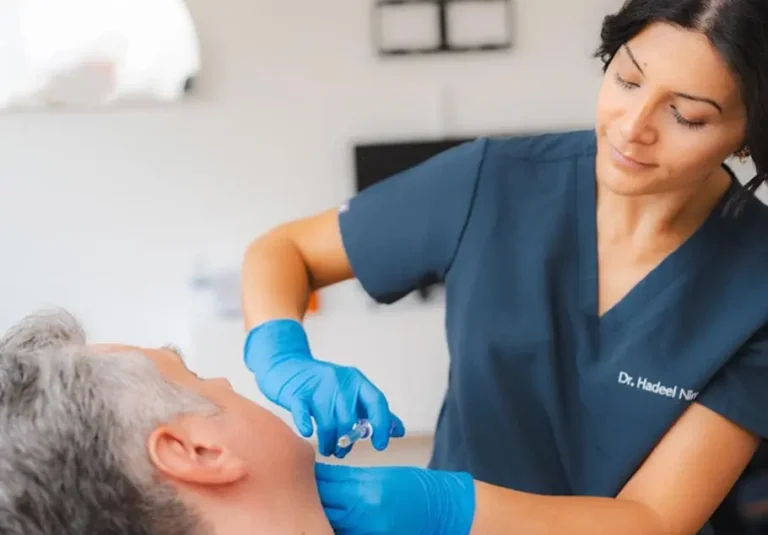
At HAVA Aesthetics in Esher, Botox treatments are led by Dr Hadeel Nimaa, with a strong emphasis on precision, balance and facial harmony. Rather than treating isolated lines, facial Botox is approached as part of a wider facial rejuvenation strategy.
Advanced Botox techniques are used to soften wrinkles while maintaining expression, supporting natural facial movement and ensuring results look refreshed rather than frozen.

Recovery Time and Side Effects
Botox treatment involves minimal recovery time. Most people return to normal activities the same day. A topical numbing cream may be used, although discomfort is usually minimal.
Common side effects include mild swelling, redness or bruising at the injection site. Temporary muscle weakness can occur but is uncommon when treatment is performed correctly.
Botox vs Dermal Filler
It is important to note that Botox and dermal filler treat different concerns. Botox addresses wrinkles caused by muscle movement, while dermal filler and hyaluronic acid are used for volume restoration, lip augmentation, cheek enhancement and tear troughs.
Many patients benefit from a combination of injectable treatments as part of full facial rejuvenation.
A Versatile Treatment Across Face and Neck
From forehead lines and crow’s feet to jawline slimming and neck rejuvenation, Botox offers a wide range of applications when used by an experienced medical professional. Its versatility makes it one of the most effective non-surgical options in modern aesthetic medicine.
If you are exploring wrinkle-smoothing treatments or want to understand which Botox treatment areas are most suitable for your facial anatomy, a personalised consultation is always the best starting point for anyone considering Botox treatments in Surrey.
Back to blog