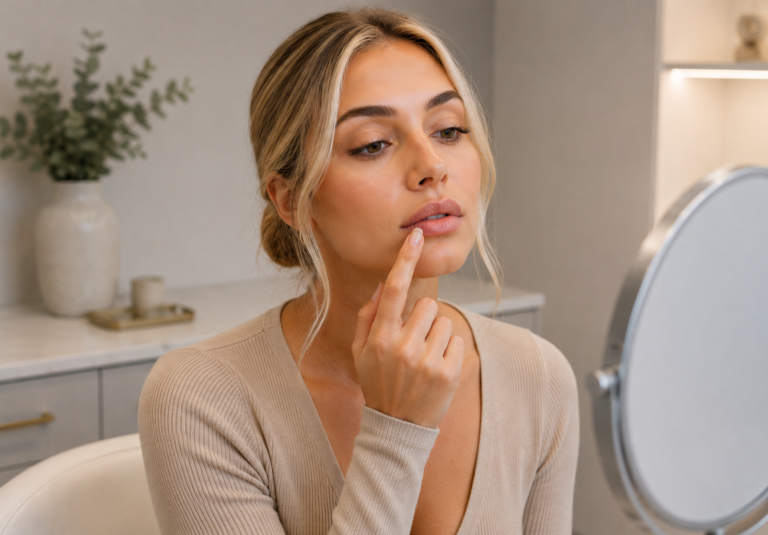
Lip filler migration has become one of the most talked-about concerns in aesthetic treatments, and for good reason. As more people have lip fillers in Surrey, more have also noticed filler that has not stayed where it should, creating a slightly puffy or blurred lip line. Like all cosmetic procedures, a lip enhancement has details worth understanding, so if you are worried about migration, whether you already have filler or are thinking about it for the first time, it helps to understand exactly what it is, why it happens and how it can be prevented and corrected. This guide covers everything you need to know.
What Is Lip Filler Migration?
Lip filler migration is when filler moves away from where it was originally placed and spreads beyond the natural border of the lip. Instead of staying neatly within the lip tissue, the product creeps upwards towards the skin above the top lip, beyond the pink part of your lips, or outwards, blurring the sharp edge where the lip meets the skin and softening your lip contour.
The result is often a subtle shelf or ridge above the lip line, a loss of lip border definition, or puffiness that can be more noticeable when you smile or make other facial expressions. It is usually a gradual change rather than something that happens overnight, which is partly why it can go unnoticed until it becomes more established. In more pronounced cases it can lead to lip shape distortion, gradually altering your natural lip structure.
What Causes Lip Filler Migration?
Migration can happen for several reasons, and often it is a combination of factors rather than a single cause:
- Too much product. Overfilling the lips, known as lip overfilling, puts pressure on the tissue, and filler takes the path of least resistance, spreading beyond the border.
- Repeated top-ups too soon. Adding new filler before previous product has broken down leads to a build-up over time, which encourages spread.
- Poor placement or technique. Filler placed too superficially, too close to the lip border, or at the wrong injection site, poor filler placement or injection technique, is more likely to migrate.
- The wrong product. Some dermal fillers are thinner or less suited to the lips, and behave less predictably in the lip area.
It is worth saying that hyaluronic acid filler naturally attracts water, so a small amount of softening and settling is normal. True migration, though, is different, and is usually linked to how much was placed, how often, and by whom.
Signs of Migrated Lip Filler
Recognising migration is not always straightforward, but there are some common signs to look for. You might notice a raised ridge or fullness in the skin just above the top lip, a loss of the crisp border that defines the lip, some shadowing above the lip line, lip asymmetry or lip shape changes, or lips that look puffy in a way that does not match your natural lip anatomy.
Some people first notice it in photos, or when applying lipstick that seems to bleed above the lip line. Migration can also affect lip movement, making the lips feel firm or less mobile during normal facial movements. If you are unsure, an in-person assessment with an experienced injector is the most reliable way to tell whether what you are seeing is migration, normal settling, or simply the effect of a little too much product. An honest clinic will give you a straight answer.
How to Prevent Lip Filler Migration
The good news is that migration is largely preventable, and prevention comes down to the same principles that produce a natural result in the first place. Building gradually rather than overfilling, spacing your treatments sensibly so previous filler has time to break down, and using premium dermal lip fillers such as Juvederm suited to the lips all reduce the risk considerably.
Above all, the choice of injector matters. An experienced medical practitioner will assess your lips, use the right amount and refined injection techniques with an understanding of the facial anatomy, and advise against overfilling even when that is what is being asked for. Careful product placement that respects your lip shape is what protects against migration. This is why treatment in a doctor-led clinic, focused on natural and balanced results, is the best protection against migration, rather than choosing on price or chasing a dramatic look.
How Migrated Lip Filler Is Treated
If you already have migrated filler, it can be corrected. Because most lip filler is hyaluronic acid, it can be dissolved using an enzyme called hyaluronidase, which breaks down the product and allows the lips to return to their natural shape. In many cases the migrated filler is dissolved first, the area is allowed to settle, some temporary lip swelling afterwards is normal, and then a fresh, more conservative lip augmentation, using precise lip contouring, can be built if you wish.
Dissolving and rebuilding should always be carried out by an experienced medical injector, both because the treatment needs to be precise and because getting back to a natural result takes a careful, staged approach. This kind of re-treatment, followed by good post-procedure care, gives the best chance of restoring your natural lip shape. If migration is something you are dealing with, the most reassuring first step is simply a full facial assessment, where your options can be explained clearly.
Booking a Consultation at Our Esher Clinic
HAVA Aesthetics is a doctor-led clinic in Esher, caring for patients across Surrey including Weybridge, Cobham and Walton-on-Thames. Under the care of Dr Hadeel Nimaa, whether you want to prevent migration with a natural first treatment, correct filler that has spread, or explore other cosmetic enhancements, every appointment begins with an honest assessment and a plan tailored to you. When you feel ready, you are welcome to book a consultation with our team.
Frequently Asked Questions
What is lip filler migration?
Lip filler migration is when filler moves away from where it was placed and spreads beyond the natural lip border, usually towards the skin above the top lip. It can create a raised ridge, a loss of definition, or a puffy appearance. It tends to develop gradually and is most often linked to overfilling or repeated top-ups.
What causes lip filler to migrate?
Migration is usually caused by too much product, repeated top-ups before previous filler has broken down, poor placement, or an unsuitable product. Often it is a combination of these. Hyaluronic acid does attract a little water, so some settling is normal, but true migration is generally linked to how much filler was used and by whom.
How do I know if my lip filler has migrated?
Common signs include a raised ridge or fullness above the top lip, a loss of the crisp lip border, or lips that look puffy in an unnatural way. Some people notice lipstick bleeding above the lip line, or spot it in photos. An in-person assessment is the most reliable way to confirm it.
Can migrated lip filler be fixed?
Yes. Because most lip filler is hyaluronic acid, migrated filler can be dissolved with an enzyme called hyaluronidase, allowing the lips to return to their natural shape. The area is then usually allowed to settle before a fresh, more conservative result is built if desired. This should be done by an experienced medical injector.
How do I prevent lip filler migration?
Build gradually rather than overfilling, space your treatments so previous filler has time to break down, use a premium product suited to the lips, and choose an experienced medical injector. Treatment in a doctor-led clinic focused on natural results is the best protection, as skill and restraint matter more than any price or trend.
Does all lip filler migrate eventually?
No. Migration is not inevitable, and many people never experience it. It is far more common with overfilling, frequent top-ups or poor technique than with a conservative, well-placed treatment. Using the right amount of a suitable product, spaced sensibly and performed by a skilled injector, keeps the risk low.
Back to blog