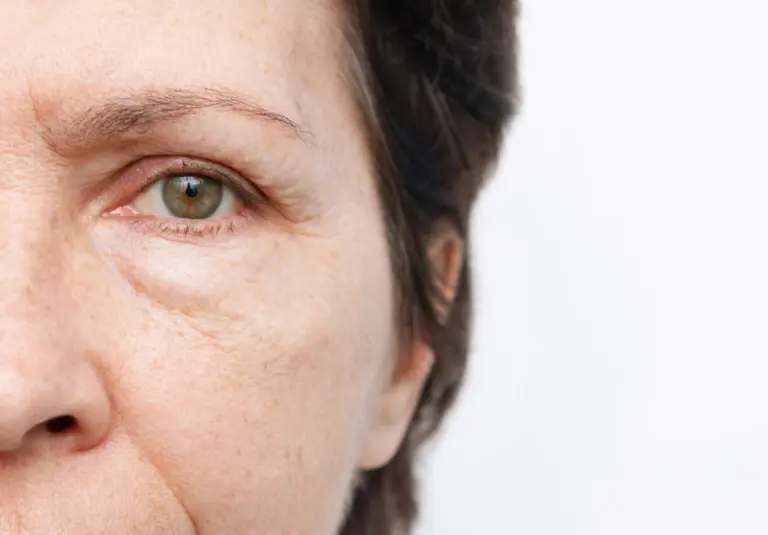
Hooded eyes can make you look heavier and more tired than you feel. Many patients tell us they have started applying eye make-up differently, or that a fold of skin now rests on the lash line where it never used to.
The question that follows is usually the same one: can anything be done short of surgery? The honest answer is that it depends entirely on what is causing the hooding, because the eyelid skin, the brow position and the tissue supporting both respond to very different treatments. A non-surgical eyebrow lift in Surrey addresses one of those causes, and this guide covers where it helps and where it does not.
What Causes Hooded Eyes?
Hooded eyes are a fold of upper eyelid skin resting over the eyelid crease, partly or fully covering it. Hooding usually comes from a combination of factors rather than a single cause.
- Genetics and natural eye shape. Some people have a lower brow position or a fuller upper lid from childhood. This is an inherited feature, not a sign of ageing.
- Loss of skin elasticity. Collagen production declines with age and elastin follows, so upper eyelid skin becomes less firm and begins to settle downwards. Eyelid skin thins earlier than skin elsewhere on the face, which is why what patients often describe as saggy skin tends to show here first.
- Brow descent. The eyebrow and the soft tissue of the forehead gradually drop over time. When the outer brow sits lower, the skin beneath it is pushed down and gathers at the lid, which is often the real driver of hooding.
- Volume loss around the temples and brow. As fat and bone support reduce across the periorbital area, the outer brow loses its underlying scaffolding and the area can look flatter and heavier.
- Lifestyle factors. Cumulative sun exposure, smoking and significant weight change can all accelerate eyelid laxity.
Hooded Eyes or Ptosis? Knowing the Difference
This distinction matters before any treatment is considered.
Hooding, sometimes called dermatochalasis, is excess or lax skin resting over the crease. Ptosis is different: the eyelid margin itself sits low because the muscle that lifts the eyelid has weakened or stretched. Brow ptosis is a third possibility, where the eyebrow has descended and the lid is being crowded from above.
It is also worth separating hooding from eye bags, which sit on the lower eyelids and come from fat and fluid rather than from brow position.
They can look similar in the mirror but respond to entirely different treatments, and true eyelid ptosis is usually assessed by an oculoplastic surgeon. If the hooding has appeared suddenly, affects your vision, or is noticeably worse on one side, it should be reviewed medically rather than approached as a cosmetic treatment.
Can You Get Rid of Hooded Eyes Without Surgery?
Not entirely, and any clinic promising otherwise is overselling. What a non-surgical eyelid lift can do is soften the appearance of hooding by improving brow position and the support around it. Where hooding is mild to moderate, that is often enough to make a visible difference. Where there is a significant amount of excess skin, it will not be.
Botox injections are what most people picture when they think of a non-surgical fix, and they can help, though indirectly. They do not remove eyelid skin. By relaxing the muscles that pull the brow downwards, they allow the brow to sit higher, which reduces how much skin gathers over the crease.
Non-Surgical Treatment Options for Hooded Eyes
Several non-surgical injectables and skin treatments may be suitable for eyelid rejuvenation.
Non-Surgical Brow Lift with Anti-Wrinkle Injections
Small doses of anti-wrinkle injections are placed in the muscles that pull the brow downwards, allowing the muscles that lift the brow to work with less opposition. The result is a subtle lift of the outer brow, which opens up the eye area, and it is sometimes called a Botox brow lift. It is non-invasive and needs no recovery, and results typically develop over 10 to 14 days and last around three to four months. You can read more about what is involved on our non-surgical eyebrow lift page.
Dermal Filler to Restore Support
Where the temples or brow area have lost volume, carefully placed hyaluronic acid dermal fillers can restore some of the underlying support so the outer brow is less weighed down. This is often combined with anti-wrinkle injections rather than used on its own.
Skin Quality Treatments
Treatments that stimulate collagen can help firmness and texture in the surrounding skin, and the mild skin tightening that follows can soften how the area reads. These work on skin quality rather than lifting the brow, so they support a plan rather than form the whole of it.
When Surgery Is the Better Option
If there is a significant amount of excess skin, or the eyelid margin itself is low, an upper blepharoplasty performed by a surgeon will achieve more than any injectable treatment, though at greater cost and with real downtime and some scarring. An honest assessment should tell you when that is the case, and we will say so.
Non-Surgical Eyelid Lift in Esher, Surrey
Across all cosmetic eye treatments, safety depends less on the product than on the person holding the needle. The muscles around the eye are small and closely related, so the injector’s experience and treatment technique matter more here than almost anywhere else on the face.
At HAVA Aesthetics, Dr Hadeel Nimaa assesses the brow, eyelid and upper face together rather than treating the lid in isolation, and suitability, expected results and any limitations are discussed before anything is agreed. She is GMC-registered, Save Face accredited and a member of the British College of Aesthetic Medicine. If hooded eyelids have started to bother you, you can book a consultation to talk through which options, if any, are suitable for you.
Frequently Asked Questions
Can hooded eyes be fixed without surgery?
Mild to moderate hooding can often be improved without surgery, particularly when brow descent is the main cause. Non-surgical treatments soften the appearance of hooding rather than remove excess skin, so results are subtle and temporary.
How long does a non-surgical eyelid lift last?
The effect of anti-wrinkle injections in the brow area generally lasts around three to four months, after which the muscles gradually return to their previous activity. Filler used to restore support in the temples typically lasts longer.
How can I fix droopy eyelids without surgery?
If the droop is caused by brow descent or skin laxity, the same non-surgical options apply. If it is true ptosis, where the lifting muscle itself is affected, injectables will not correct it and a surgical opinion is needed.
Do hooded eyes get worse with age?
Skin laxity and brow descent both tend to progress gradually, so hooding often becomes more noticeable over time. The rate varies considerably from person to person.
Can hooded eyes affect vision?
Significant hooding can occasionally interfere with the upper field of vision. If you notice this, speak to your GP or an eye specialist, as it may be assessed as a medical rather than cosmetic concern.