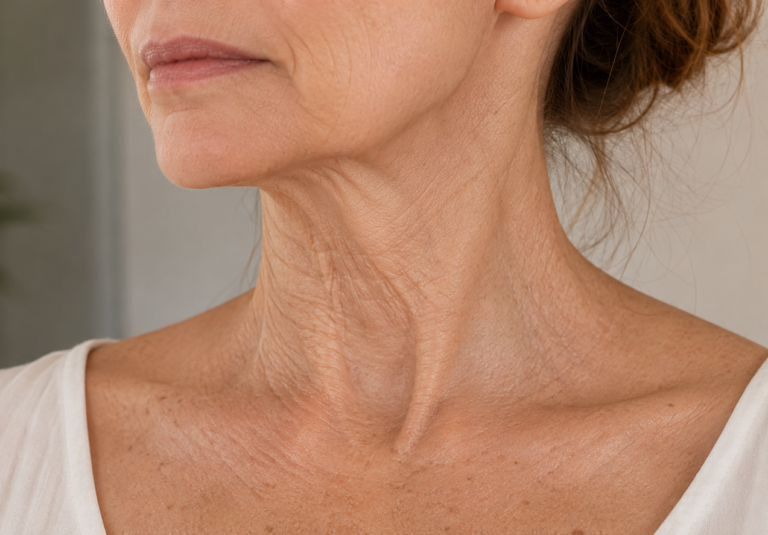
Microneedling can improve crepey skin by stimulating collagen and elastin in thin, lax areas such as the neck, under-eyes and décolletage. Results are gradual and best over a course, and it’s often paired with polynucleotides for thinning skin. Severe laxity may need combined or alternative treatments, assessed in consultation.
Crepey skin can be one of the most frustrating changes to notice, often appearing on the neck, under the eyes or across the décolletage, where the skin is naturally thinner. If you have been wondering whether microneedling in Surrey can help, the honest answer is that it often can, with realistic expectations and usually over a course rather than a single session. As one of the most established regenerative treatments for skin quality, it supports skin repair and skin rejuvenation gradually over time. This guide explains what causes crepey skin, how microneedling helps, and when it works best on its own or alongside other treatments.
What Causes Crepey Skin
Crepey skin is thin, finely lined skin that can look a little like crepe paper, and it is different from deeper wrinkles or sagging. It tends to develop where the skin is naturally delicate and gets a lot of wear over the years.
The main causes include:
- A natural decline in collagen and elastin as we age, which reduces firmness, bounce and overall skin structure
- Sun exposure over time, which is one of the biggest contributors to thinning, lined skin, and to crepey wrinkles, hyperpigmentation and uneven skin tone
- General loss of hydration and skin quality
- Areas of frequent movement or fragile skin, such as the under-eyes, neck and décolletage
Because crepey skin is largely about thinning and a loss of collagen and elastin, treatments that rebuild skin quality from within tend to be the most helpful, which is where microneedling comes in.
How Microneedling Helps
Microneedling works by creating tiny, controlled micro-injuries in the skin using a medical-grade device. This prompts your body’s natural repair response, driving collagen production and elastin production as the skin heals. Over time, that added collagen helps to thicken and firm thin, crepey skin, gradually improving its texture, skin tone and resilience, with a subtle skin tightening effect as the structure strengthens.
For crepey skin specifically, this is exactly the kind of support the skin needs. Rather than sitting on the surface, microneedling stimulates the deeper rebuilding of the skin’s own structure, which is what gives crepey areas a smoother, firmer and more refreshed appearance. The same collagen-building action is why microneedling is also used for concerns such as acne scars and stretch marks. You can read more about microneedling treatments in Surrey and how we tailor them to delicate areas.
Best Areas to Treat
Crepey skin tends to appear in particular places, and microneedling can be adapted to treat them carefully:
- The neck, where skin is thin and prone to fine, crepey lines
- The under-eye area, one of the most delicate areas of the face
- The décolletage, which is often exposed to the sun and shows crepey texture early
- The jawline and lower face, where mild laxity can begin to show
- The backs of the hands, which can also become thin and crepey over time
These are sensitive areas, so the depth and technique are adjusted to suit each one as part of careful treatment planning. This is part of why having treatment in a medical setting matters, as delicate areas need an experienced, careful approach.
Realistic Results and Timeline
It is important to be realistic, and a good clinic will always be honest with you about this. Microneedling does not deliver an instant fix, and it works gradually as your skin rebuilds collagen.
Most patients have a course of around three sessions, spaced four to six weeks apart. You may notice your skin looking fresher within a few weeks, but the more meaningful improvement in firmness and texture develops over two to three months as new collagen matures. Results build with the course rather than appearing after a single treatment, and many people maintain their improvement with occasional top-up sessions and good post-treatment care.
It is also worth being clear that microneedling improves crepey skin rather than removing it entirely. For mild to moderate crepiness it can make a real difference. Where there is significant skin laxity or sagging, it may be better combined with other treatments, or a more intensive option such as RF microneedling or another skin tightening approach may be more suitable, which is something to assess in person.
When to Combine with Polynucleotides
For thin, crepey skin, microneedling is often paired with polynucleotides, and the two work particularly well together. While microneedling stimulates collagen from the surface, polynucleotides in Surrey work from within to hydrate, strengthen and regenerate fragile skin. For delicate, thinning areas such as the under-eyes and neck, that combination of regenerative treatments can be more effective than either treatment alone.
Whether a combined plan is right for you depends on your skin and the degree of crepiness, which is assessed at consultation. Combining treatments should always be staged and planned by a practitioner rather than booked separately.
Book an Assessment
The best way to know whether microneedling can help your crepey skin, and whether it is best on its own or combined, is a proper patient consultation. At HAVA Aesthetics in Esher, Dr Hadeel Nimaa will examine the areas concerning each client, explain what is realistically achievable and recommend the most suitable plan. When you feel ready, you are welcome to book a consultation with our team.
Frequently Asked Questions
Can microneedling fix crepey skin?
Microneedling can noticeably improve crepey skin by stimulating collagen and elastin to firm and thicken thin, lined areas. It improves rather than completely removes crepiness, and works best over a course. For mild to moderate crepey skin it can make a real difference, while significant laxity may need a combined or alternative approach, assessed in consultation.
How long until I see results on crepey skin?
Results are gradual. You may see fresher-looking skin within a few weeks, but the fuller improvement in firmness and texture develops over two to three months as new collagen forms. A course of around three sessions is usually recommended, with results building over time rather than after a single treatment.
Is microneedling safe for the under-eye area and neck?
Yes, when performed by a trained practitioner in a medical setting. These areas have delicate, thin skin, so the depth and technique are carefully adjusted to treat them safely. This is one of the main reasons to have microneedling on crepey areas in a doctor-led clinic rather than a non-medical setting.
How many microneedling sessions do I need for crepey skin?
Most people need a course of around three sessions, spaced roughly four to six weeks apart, as collagen builds gradually between treatments. The exact number depends on the area, the degree of crepiness and how your skin responds, which is confirmed at your consultation. Occasional maintenance sessions help preserve results.
Will microneedling work on severe crepey skin or sagging?
Microneedling is most effective on mild to moderate crepey skin. Where there is significant laxity or sagging, it may be less effective on its own and could be better combined with other treatments, or another approach may be more suitable. An in-person assessment is the only way to know what will realistically help.
Is microneedling or polynucleotides better for crepey skin?
Both help, and for thin, crepey skin they are often combined. Microneedling stimulates collagen from the surface, while polynucleotides regenerate and hydrate fragile skin from within. For delicate areas such as the under-eyes and neck, using the two together can be more effective than either alone, depending on your skin and goals.